The 106th Archbishop of Canterbury is a woman.
Later this month, The Most Rev Dame Sarah Mullally will be installed as the Head of the Church of England and the Anglican Communion, the shepherd (as she calls the role) of more than 100 million souls. This will be a historic event.
We asked women leaders and leading thinkers from across CTE Member Churches for their thoughts on its significance.
Vice Chair of Trustees Churches Together in England, Rev Dr Lurliene Miller
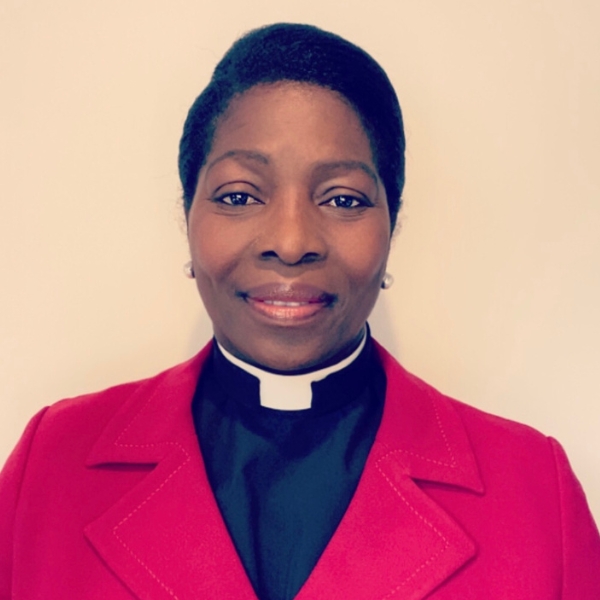
Across ecumenical spaces, women in prominent roles carry both the legacy of faith and the labour of the church’s mission. Long the spiritual backbone of the church, they have sustained its life even when formal authority failed to reflect their contribution. The tension is historic as well as theological.
Beyond doctrine lie practical pressures: balancing ministry with family expectations, navigating male-dominated spaces, and enduring subtle exclusion. Women often bear a double weight — the visible responsibility of spiritual oversight and the invisible burden of proving legitimacy. Even where barriers have fallen, cultural assumptions linger, shaping how leadership is received.
The call of God does not come with a gender clause, yet women are frequently scrutinised before their gifting is affirmed. Theologian and activist Prathia Hall declared, “I have a dream,” words that shaped a movement often attributed to male voices. Her witness reminds us that women’s leadership has been prophetic before it was platformed.
Though challenges persist, women continue to lead faithfully, creatively and courageously, expanding the imagination of what servant leadership looks like in the Body of Christ.
Bishop of the Lutheran Church of Great Britain and CTE President representing the Fourth Presidency Group, Bishop Paulina Hławiczka-Trotman
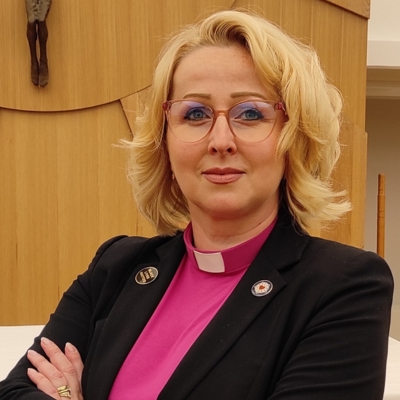
The election of Sarah as Archbishop of Canterbury has reopened an old conversation in the Church. Some see it as a breakthrough. Yet women have always been part of God’s leadership story. Scripture itself remembers women who taught, prophesied, and helped shape the earliest Christian communities.
For a long time, some of their stories were softened, hidden, or even renamed. But careful reading with study tools has begun to restore them to view. We meet Junia, whom Paul calls “prominent among the apostles,” though for centuries her name was turned into the masculine “Junias.” We meet Phoebe, a deacon, and Priscilla, a teacher and missionary partner. Their presence reminds us that women were never absent from the work of the Gospel, even in a time when they had little voice in a deeply patriarchal world.
Still, the path is rarely easy even today. Women who sense a call often must walk slowly and gently, proving again and again that their call is real, and that they are good enough for their voice to be heard.
I know this journey myself. I felt called to ordained ministry when my church in Poland did not yet ordain women. Many of us encountered silence, resistance, humiliation, belittling, ridiculing and closed doors. More than once I thought about giving up.
And then, unexpectedly, another door opened. The Lutheran Church in Great Britain needed someone to serve a Polish-speaking migrant community. I barely spoke English at the time, and the idea felt impossible. Yet God’s call often arrives exactly where we feel least prepared. You pray, you hesitate, you might even ask for the cup to pass from you, but somehow you keep walking.
Years later, you look back and see that what felt uncertain and fragile was quietly guided all along. God had already been arranging what you could never have planned yourself.
The Church does not need to create space for women’s leadership. It needs to remember that the space was always there.
“…there is neither male nor female; for you are all one in Christ Jesus…” Galatians 3:28
Free Churches Moderator and CTE President, Rev Dr Tessa Henry-Robinson
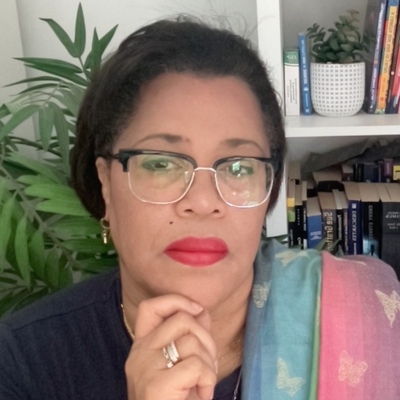
Women inhabiting prominent roles in the Church carry a double calling—to serve the gospel and to navigate structures rarely shaped with women’s leadership in mind. These challenges surface in the questioning of authority, the constant need to prove competence, and the expectation that a woman simultaneously embody grace, strength, and restraint.
The extra challenge begins long before a woman is called. It grows from centuries of misogynistic interpretations and misreadings of Scripture. Generations of teaching have diminished the witness and authority of women in the biblical narrative, allowing distorted readings to harden into assumed truth and shape how the church imagines leadership.
Black women leaders encounter misogynoir. Our leadership exists at the intersection of faith, ethnicity, gender, and in/justice. Historically, our raced bodies have borne witness that God’s call holds authority beyond the boundaries institutions have drawn.
When women lead, the church encounters a fuller expression of God’s justice and creativity.
Theologian and Associate Lecturer at the Institute for Orthodox Christian Studies, Cambridge, Dr Elizabeth Theokritoff
The roles of women in the Orthodox Church are rarely prominent, though often vital. Women are not ordained to the ministry: there have been sporadic attempts to revive the ancient order of deaconesses, but not in this country. Women are thus often the main champions of the dignity and responsibility of the order of laity. That important ecclesiological principle was a notable feature especially of the Russian diocese in Britain in the days of Metropolitan Anthony (Bloom) of Sourozh, and is still maintained in a number of parishes. But if anything, we have seen an increasing clericalisation across the major Orthodox jurisdictions more recently – lay people sometimes more ‘clerical’ in their attitudes than clergy.
A number of Orthodox women represent the Church informally in areas such as chaplaincy or theological education and scholarship. In diocesan and parish life, women fulfil multiple roles: directing choirs, singing and reading, as well as serving on parish councils, teaching and organisation, informal and occasionally formal pastoral assistance. The attitude of the clergy is frequently collegial, open and respectful. But with many parishes lacking their own church building, there is often little communal activity other than worship. The resultant shortage of structures within which the gifts of laypeople are seen to be used can be frustrating, including for some women with theological education – and for girls in our communities, growing up with very different expectations of women’s roles. There is however growing awareness, not least from parish clergy, that greater recognition of the roles women actually fulfil, perhaps through a specific blessing, would benefit the whole Church.
Deputy Recording Clerk, Quakers in Britain, Siobhán Haire
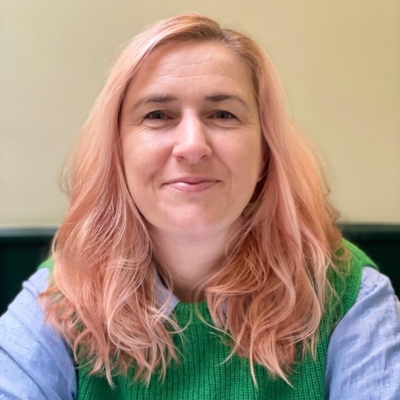
360 years ago, Margaret Fell, one of the most prominent early Quakers, published a pamphlet – “Women’s speaking justified”. In it, she used scriptural examples to demonstrate that Jesus valued the voices, ministry and prophesy of women. Published at a time when the witch trials of early modern Europe would have been in fairly recent memory, and serious thinkers pondered whether women really had souls, this was radical material.
Today, I largely take for granted the right to speak and to lead in my faith community. When I began to serve my Quaker community in a national leadership role, I was 29 and had a 4 month-old baby. My leadership was supported by Quakers in the most practical ways. I was given space and time to breast-feed during meetings, a double room so that my husband could join residential events to care for our daughter, meetings at times which suited my new, exhausting routine, and a constant unspoken sense that the community backed me up. Without this, I would undoubtedly have wondered about stepping back.
Despite this, I still find myself all too often in spaces where male voices dominate, where women, and other minority groups too, take up less than their fair share of the airtime, where power dynamics are not acknowledged, much less addressed. Advocating for, and explicitly supporting, diverse leadership will remain key work for the church – and for the society it serves – for as long as those spaces still exist.
Pioneer International Leader Linda Ward
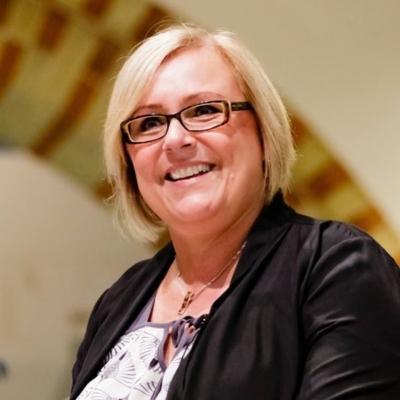
In the lead-up to the installation of Sarah Mullally, I have been reflecting on the particular dynamics women face in visible church leadership. I serve within Pioneer, a network that actively releases women into leadership, and I have just stepped into an international leadership role. Alongside this, I work as a mediator, which has heightened my awareness of power dynamics, particularly how gender can subtly shape perception, voice and influence. Within my own context I feel fully recognised, yet when I step beyond it, I am reminded that women are not always regarded as co-equal partners in ministry. I am mindful that not all churches share the same theology or ecclesiology, and where my presence might unintentionally hinder trust, I will sometimes send trusted male colleagues ahead to build relationship and ease the way.
Now in my fifties, I no longer feel the need to prove anything; I quietly pursue what God has called me to with a settled confidence. It has made a profound difference to have men who have championed my leadership and recognised God’s call above my gender. It is equally important that we, as women, encourage and champion one another. I am praying for Sarah in her new role – for wisdom, courage, every success, and for the Holy Spirit to guide her daily decisions.
Women Presidents of Churches Together in England
The Archbishop of Canterbury also takes on the role of a President of Churches Together in England. Archbishop Sarah will sign the Presidents’ Covenant, which describes their commitment to each other and to the churches in England.
Archbishop Sarah is not the first woman to be a CTE President. We honour her predecessors:
1995-1999 Rev Kathleen Richardson O.B.E.
1998-2001 Rowena Loverance
2002-2005 Rev Esme Beswick M.B.E.
2007-2011 Com Elizabeth Matear
2011-2014 Rt Rev Jana Jeruma-Grinberga
2023-2024 Dr Anna Krauss
2022-2025 Rev Canon Helen Cameron
2025- Rev Dr Tessa Henry-Robinson
2025- Rt Rev Paulina Hławiczka-Trotman
***“Smashing the stained glass ceiling” was a phrase used by Rev Canon Kate Bottley on BBC Songs of Praise for International Womens’ Day on Sunday 8 March. Watch the programme.