On a cold and grey February day I went to meet Vicar of Trinity church, a Local Ecumenical Partnership (LEP), in Lower Earley, near Reading. Rev Jon Salmon, who trained as an anthropologist and lived and worked in many parts of Sub-Saharan Africa before ordination, has been leading the church community for just over 18 years. Jon spoke of ‘tilling the soil’ for many years with a sense of expectancy that God, by His Spirit, may do something new amongst them, but he hadn’t planned on more than trebling the size of his church almost overnight. That happened with the arrival of 300 Hong Kong Chinese Christians looking to find a home as they left the territory for political reasons. This has now grown to approximately 500, so altogether a church of 650 or so. Today Trinity is probably the largest and fastest-growing LEP in England!
The church was founded in the mid 1980s when LEPs were ‘all the rage’ and historical denominations had the funds to invest in buildings in areas of significant new housing. At one point, Earley was the largest privately funded new housing estate in Western Europe. The LEP is made up of an Anglican, Methodist and URC partnership but Jon, an Anglican, said that people of any denomination could find a home amongst them.
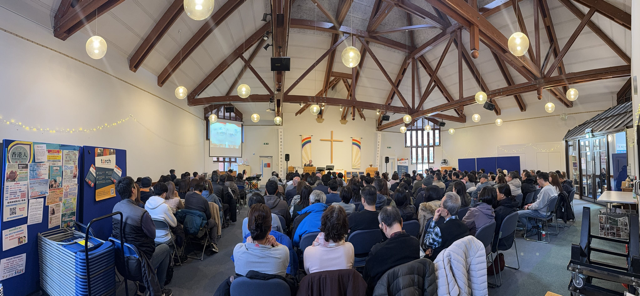
It was a chance invitation to a group of Chinese Hong Kong Christians unable to worship in the church they regularly used because of a carol service that saw the beginning of a new partnership and a shared vision of one integrated church at Trinity.
Over the past three to four years this has grown and developed. Jon said that he has tried to be intentional in diversifying the church leadership but inevitably, sometimes it is a case of ‘muddling through’ with grace and love. Day to day, the local congregation and the Cantonese Christians work together in both strategic and organic ways. The ‘One Church Project’ is seeking to shape integration as fully as possible. This is gradual and there is no blueprint.

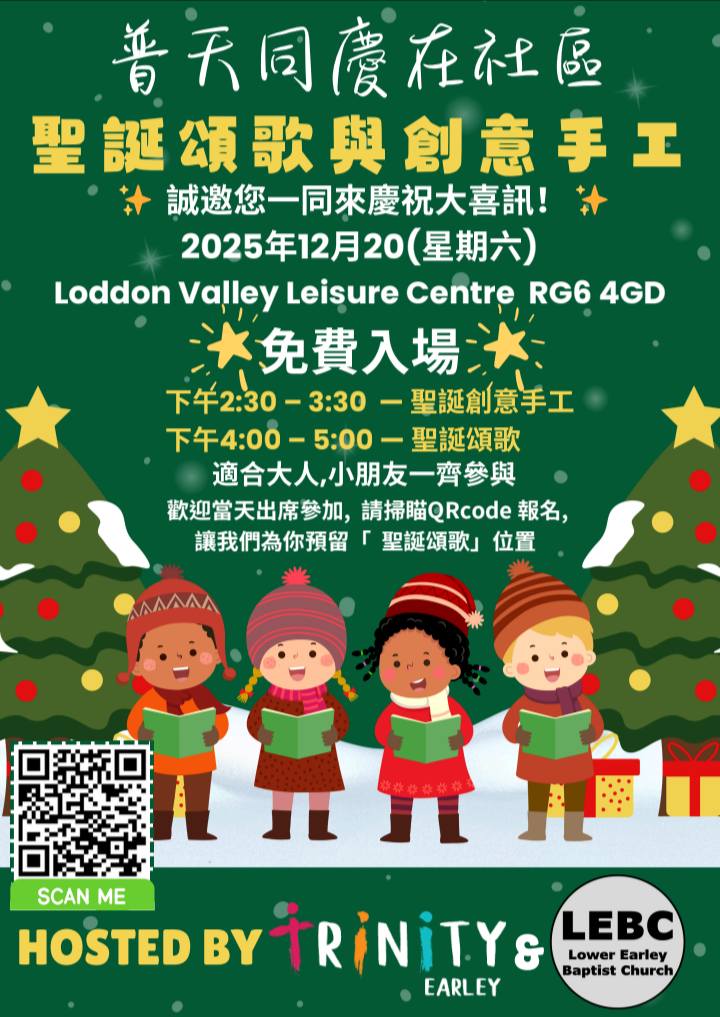
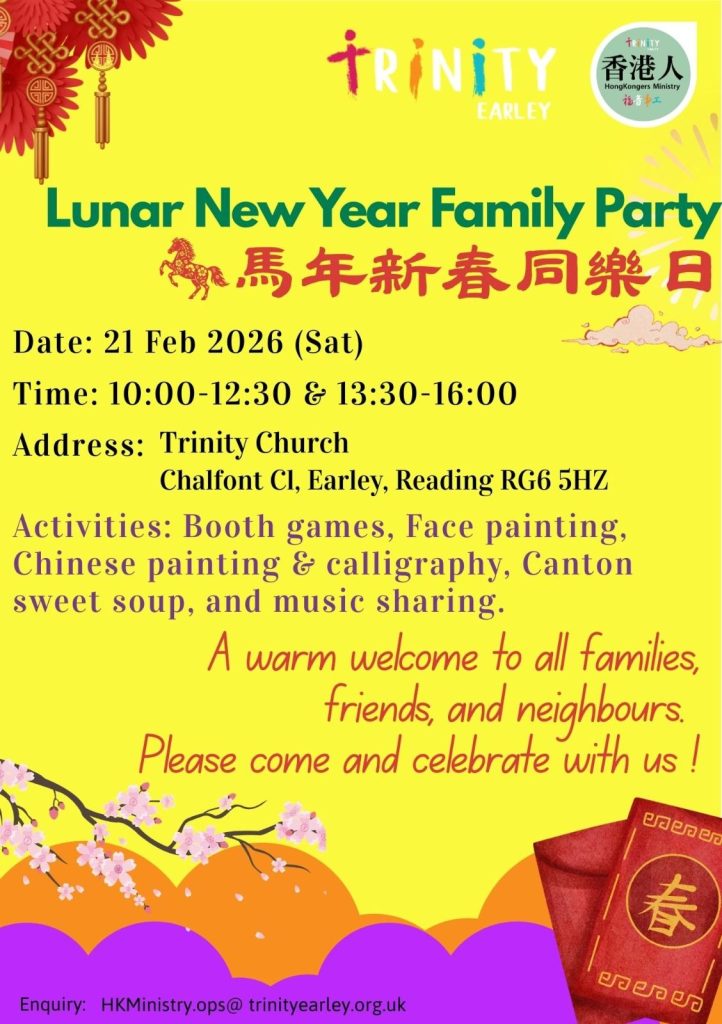
To support integration, the Diocese of Oxford has obtained SMMIB (Strategic Ministry and Mission Investment Board) funding under its New Communities Programme and Trinity has become a resourcing hub within this. This has enabled the employment of an Associate Priest, Rev Fung Lau, originally from Hong Kong, who leads a small team of associate pastors, who oversee the Cantonese ministry. As a hub, Trinity is planting five new Cantonese-speaking congregations into local churches with the vision for them to partner with their host church. The first plant began in 2023 in Winnersh and two further plants are planned for 2026.
Jon is pragmatic in his approach. It’s obvious the gift of so many new people, many baptisms and fast growth is really the work of the Spirit rather than anything strategic that Jon and his team have set out to achieve. His training as an anthropologist, taking people’s culture, language and traditions seriously, must surely be part of the reason God brought such growth here at this time.
As I travel across England and meet many church leaders, I’m beginning to detect that there are more and more churches which are both intercultural and ecumenical, and my suspicion is that the future of fruitful growth may be in inclusive ecumenical life together.