Joshua Townson writes…
This experience was truly once in a lifetime.
The primary focus was the two-and-a-half week residential course for the Global Ecumenical Theological Institute (GETI) followed by the four-day Sixth World Conference on Faith and Order. Both of these took place in October 2025 at Logos Papal Centre of the Coptic Orthodox Church at Wadi El Natrun, Egypt.
GETI was particularly transformational for me, in terms of prayer, and in terms of understanding of the experience of Christians around the world.
My own prayer life has been renewed in an unexpected way, through discovering the use of meditative/repetitive prayer as a way to process complicated thoughts and feelings. I have already felt the benefit of this in the short term, and I really feel this will lead to longer-term mental health benefits as well.
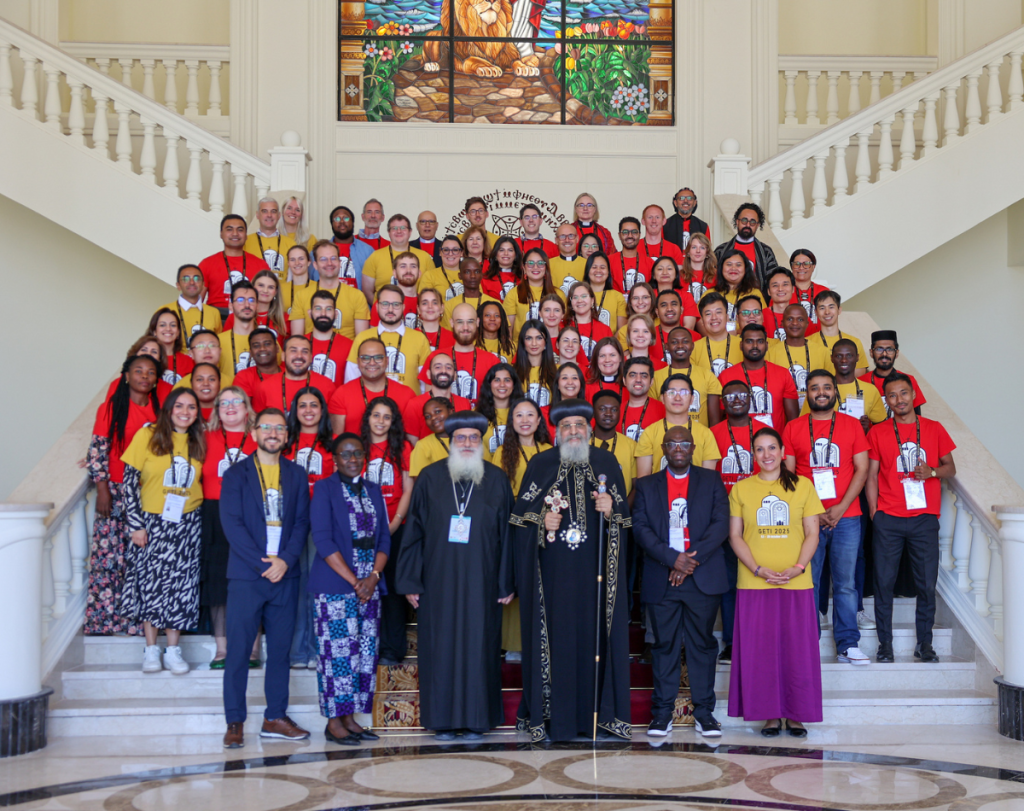
The small learning groups at GETI introduced me to some truly inspiring Christians. These groups were deliberately international and inter-denominational and close ecumenical friendships were given the space to grow. Of these, one particular one will stand out to me for the rest of my life. This was with a young pastor from the Baptist Church of Indonesia who (in a very humble way) shared stories of supporting individuals in her community – both Christians and non-Christians – who were living in an extremely persecutory context. Stories such as comforting and defending a woman suffering marital abuse and supporting a young man wrestling with issues around his sexuality.
Other highlights of the GETI course included:
- hearing directly from Palestinian Christians about their day-to-day struggles.
- listening to His Holiness Pope Tawadros II’s opening address to the young people, as well as experiencing the ongoing youth revival under his and Bishop Thomas’ leadership.
- visiting the monasteries of St Macarius and Al-Baramus, and the Anaphora Study Centre. The current revival in monasticism was absolutely astonishing and the different structure of monastic daily life was fascinating.
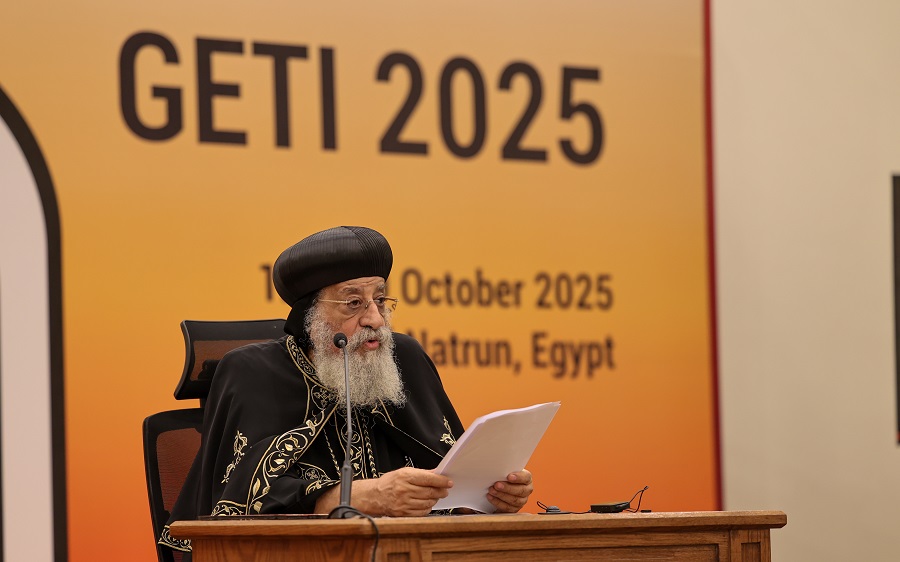
The Faith and Order World Conference had a different feel to the GETI programme. Within GETI (a course open to under-35s), there was a sense that ecumenical disagreement could be had without harming the underlying relationships of the people; a certain sense that we knew we would disagree but would continue to be together as Christian friends. For me, it felt like this disappeared with the Faith and Order Conference, where there was more of a sense that disagreement was something to be feared lest it lead to schism. Nevertheless, Faith and Order did offer me the opportunity to make some amazing contacts in the academic world, which will undoubtedly enhance my PhD studies and future career.
I would like to reflect on one other challenge I faced during my experience in Egypt. The liberal-conservative divide in churches, as this led to quite a personal crisis and subsequent growth as I worked through it.
In the UK I both attend a Greek Orthodox church and work for the Church of England. Within these contexts I have, respectively, a space to express my theological conservatism and a space to be openly socially liberal, especially with regard to LGBTQI+ issues. In Egypt I lost this balance of spaces; non-Orthodox Western Christians tended to be both socially and theologically liberal, non-Orthodox non-Western Christians tended to be socially conservative and theologically liberal, and Orthodox Christians both socially and theologically conservative. This led to me having no natural ‘home’ amongst the GETI scholars. As a result, I had to reassess the legitimacy of my own views and to find a way to express these to my fellow participants in a way that could enable mutual understanding. This was hard work but was ultimately fruitful and led to some great conversations. I’m now better equipped to explain and justify theological conservatism to modern Western believers and social liberalism to Orthodox colleagues, in a way accessible to both.
Read the message of ‘prophetic courage’ issued at the end of GETI by participants.
Find out about The Bill Snelson Young Ecumenists Fund and read about the experience of other grant awardees.