George Floyd’s murder, at the hands of the Minneapolis police on 25 May 2020, has been described as a Kairos moment for racial justice. At the time of this tragedy, much like now, I was working as Director of Justice and Inclusion for Churches Together in Britain and Ireland (CTBI), taking forward its racial justice work, among other activities. My work took on added impetus after the tragedy, as I was inundated with requests from churches, parachurch groups and Christian organisations to ‘help them’ address many of the issues emanating from that appalling event.
I would argue that British and Irish churches were playing catch up on racial justice after George Floyd. As they were so busy establishing commissions and committees, and writing reports and undertaking reviews, they could not positively participate in the vital conversations that came into focus after May 2020. I would also contend that British churches have never played a substantive role in any racial justice-related activities. There has been a lack of collective Christian-related participation in the various laws and prohibitions outlawing racism and inequality in this country. (Although a limited number of Christians have valiantly spoken about racial justice, they often did this in an individual capacity, with little validation from their churches.)
It was my hope that the death of George Floyd, which I called a key moment, would become a movement for change that would see the Church at the forefront of a righteous fight for racial justice, truth, compassion and love; values for which Jesus died, and we should live.
So-called Kairos or key moments for racial justice are invariably the result of the violent killings of Black folks. As Christians, how do we interpret Jesus’ words: ‘I have come that they may have life, and have it in abundance,’ regarding racial justice? I would argue that this refers to people being able to live lives free from discrimination and violence.
Therefore, the riots we experienced last year were a wake-up call to all those who believed we had ‘done enough’ on racial justice after George Floyd. Moreover, last year’s rioters were keen to latch onto Christian symbols, claiming that they were part of being British. I believe that hatred and violence are bedfellows that have no place in the Christian faith. There is little doubt that both were pivotal in the killing of George Floyd, and only serve to divide communities, including the Church.
As the Racial Justice Sunday resources for 2025 reveal, the Church is a ‘coat of many colours’; this diversity is a divine movement of God that must be celebrated. For me, Christians must oppose anything that seeks to undermine this Godly movement. Consequently, the fifth anniversary of George Floyd’s death should see Christians recommitting themselves to making good on all the promises made at the time, and ensuring that we do not have a repeat of last year’s unseemly events.
‘From Lament to Action’ – a service marking the fifth anniversary of the killing of George Floyd
Sunday 25 May 2025 , 3pm at St John’s Church, Waterloo Road, London SE1.
The Racial Justice Advocacy Forum invites you to a dynamic and prophetic ecumenical service to mark the fifth anniversary of the killing of George Floyd.
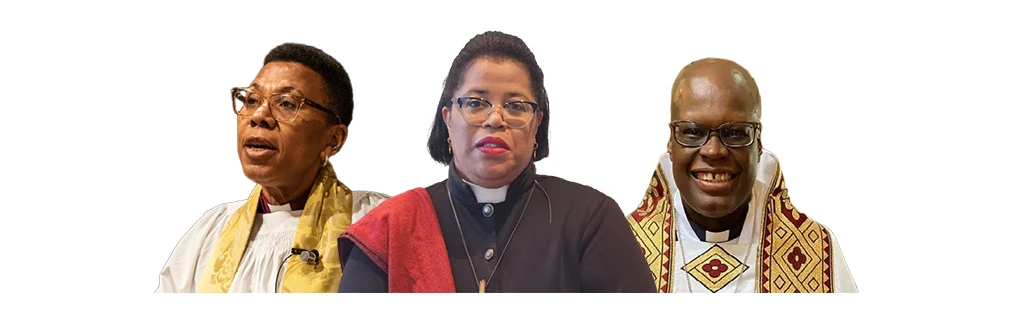
The co-celebrants include the Anglican Bishop of Croydon, Rev Dr Rosemarie Mallett, CTE President Rev Dr Tessa Henry-Robinson and CTE General Secretary Bishop Mike Royal. The programme also features Christ’s Hospital School Gospel Choir and organist Wayne Marshall, OBE.
Let’s come together to reflect, mourn, and discuss how we can turn our grief into meaningful action. This in-person event aims to unite our community and inspire positive change.