This past Holy Week, I spent ten days at Spring Forest, a new monastic community on a farm in North Carolina. I had heard about them when their Abbess visited my theological college, and I was eager to experience how community living, ecumenism, and creation care could be woven together. What I discovered was far more than an academic curiosity—it was a deeply transformative encounter with God, the land, and a community of faith.
Praying with my hands in the soil
I had never farmed before, not even gardened, and yet I found myself spending much of my time working outdoors. To my surprise, I loved it. The rhythm of manual labour—digging, planting, tending—became a way of praying. With my hands busy and my mind focused, I discovered a new depth of connection with God.
Having lived most of my adult life in London and other cities, I had not realised how powerful rural life could be. I was especially moved by the children in the community, who learn so much about God’s creation simply by living close to the land. As I worked alongside them, I saw how creation itself can become a teacher and how farming can be an act of worship.
Spring Forest draws people from many different denominations—some living on site, others nearby, and others who connect via Zoom or occasional visits.
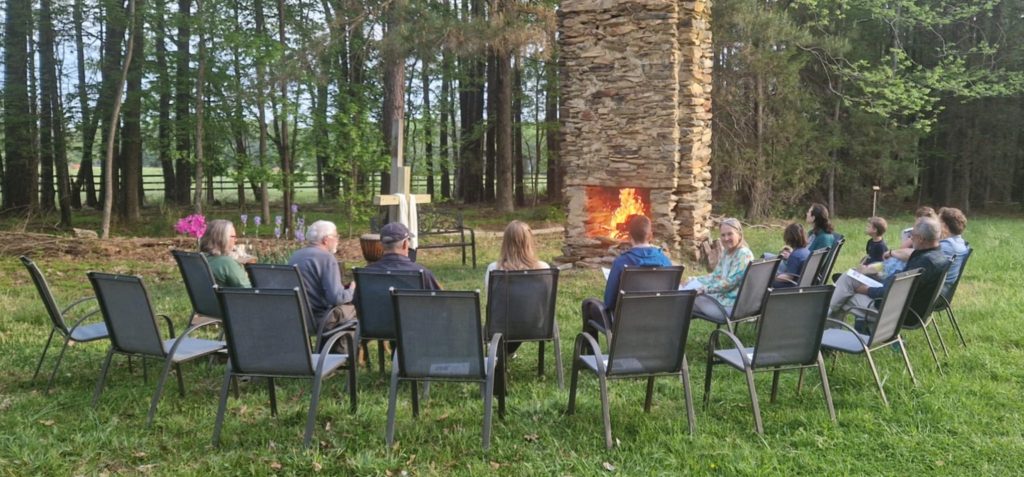
I was slightly anxious about spending Holy Week outside my Anglican tradition. I found, however, that spending that time immersed in a new pattern of worship helped me to engage anew with the story. The services were simple, often held in the context of shared meals and fellowship, but they carried a powerful sense of unity. Our differences in worship style and theology faded into the background. What bound us together was our shared love for Jesus and for God’s creation.
I also loved helping in the children’s garden and outdoor kitchen during the weekly family morning. Local people came—some from different denominations, some from other faiths, and some with no faith at all. Yet everyone was welcomed. It was a glimpse of what happens when a community chooses unity over division: people feel safe, celebrated, and included.
Hospitality and lessons for ministry
One of the big things that I learned from Spring Forest was about balancing individuality with community. Those living on site had private spaces that were respected, but their homes were also places of hospitality, opened to others for meals, fellowship, and practical needs.
This resonated with me personally. Having just been ordained and moved into a house with spare rooms for the first time, I’ve been thinking a lot about hospitality—how to make my home an open, welcoming space while still safeguarding personal boundaries. At Spring Forest I saw this balance lived out, and it gave me new insight into how I might practice hospitality in my own ministry.
I returned from Spring Forest with a renewed vision of what Christian community can be. Ecumenical, hospitable, rooted in creation care, and above all, centred on love of Christ. I am now preparing to share these experiences with my new parish, my theological college, and local ecumenical groups.
Photo credits: Rev Laura Macfarlane
Find out about The Bill Snelson Young Ecumenists Fund and read about the experience of other grant awardees.