I had the privilege of spending eight days on pilgrimage, visiting the seven churches addressed in Revelation 2 and 3 in what is now modern-day Türkiye. From the outset, the journey felt like stepping into the pages of Scripture. We travelled not simply to observe ancient ruins, but to immerse ourselves in the lived reality of the early church—to understand how believers navigated persecution and cultural pressure, to reflect on Jesus’ words to them as recorded by John, and to ask how those same words challenge and encourage us today. The added connection to Paul’s missionary journeys made the experience even richer.
We visited the archaeological sites of Ephesus, Smyrna, Pergamum, Thyatira, Sardis, Philadelphia, and Laodicea, as well as Hierapolis, Pamukkale, Colossae, and Miletus. These places became not simply remnants of the past, but places where communities of faith gathered, struggled, repented, and persevered. Understanding the historical and cultural context of Christ’s words in Revelation prompted me to consider how I respond to the pressures of our own time.
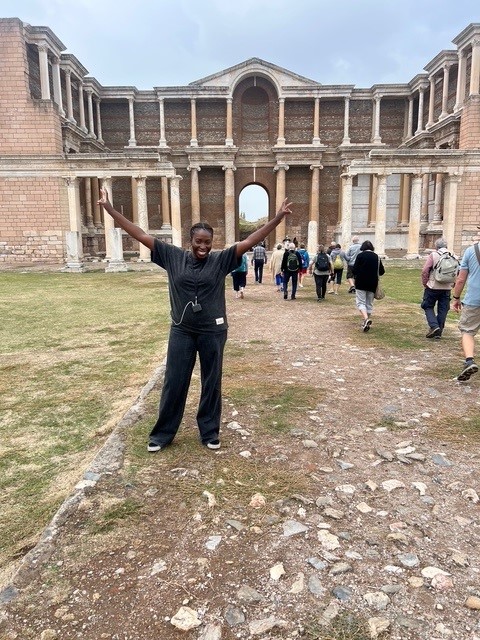
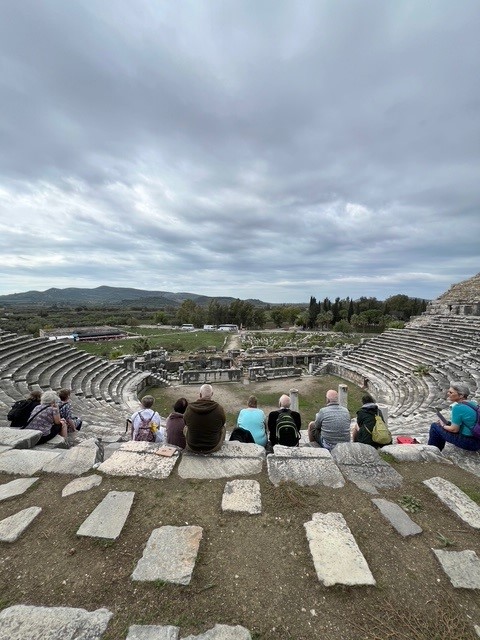
One of the most powerful moments of the pilgrimage took place at Miletus, where Paul delivered his farewell to the Ephesian elders at the close of his third missionary journey (Acts 20:17–38). Sharing Holy Communion in that place was deeply significant, and I had the honour of reading the passage aloud. Standing in a place associated with sacrifice, obedience, and steadfast faith made the words resonate with renewed clarity. It was a sacred and unforgettable act of shared worship.
Our group was made up of people from several traditions. From the Pentecostal church (my own background), the United Reformed Church, the Baptist Church, and the Church of England. Despite our denominational distinctions, we had a strong and tangible sense of unity in Christ. We walked, prayed, sang, and reflected together. We spoke honestly about scripture, persecution, and the challenges facing the Church today. The experience strengthened my conviction that what binds us together in Christ is far greater than our differences.
I was the youngest person amongst the pilgrims. I had imagined the groups would be made up of peers, so I was initially surprised. However, this quickly proved to be one of the pilgrimage’s greatest blessings. I found myself surrounded by Christians whose years of faithful living had shaped a deep well of wisdom. Their insight and authenticity enriched every moment and reinforced for me the importance of intergenerational experiences at church.
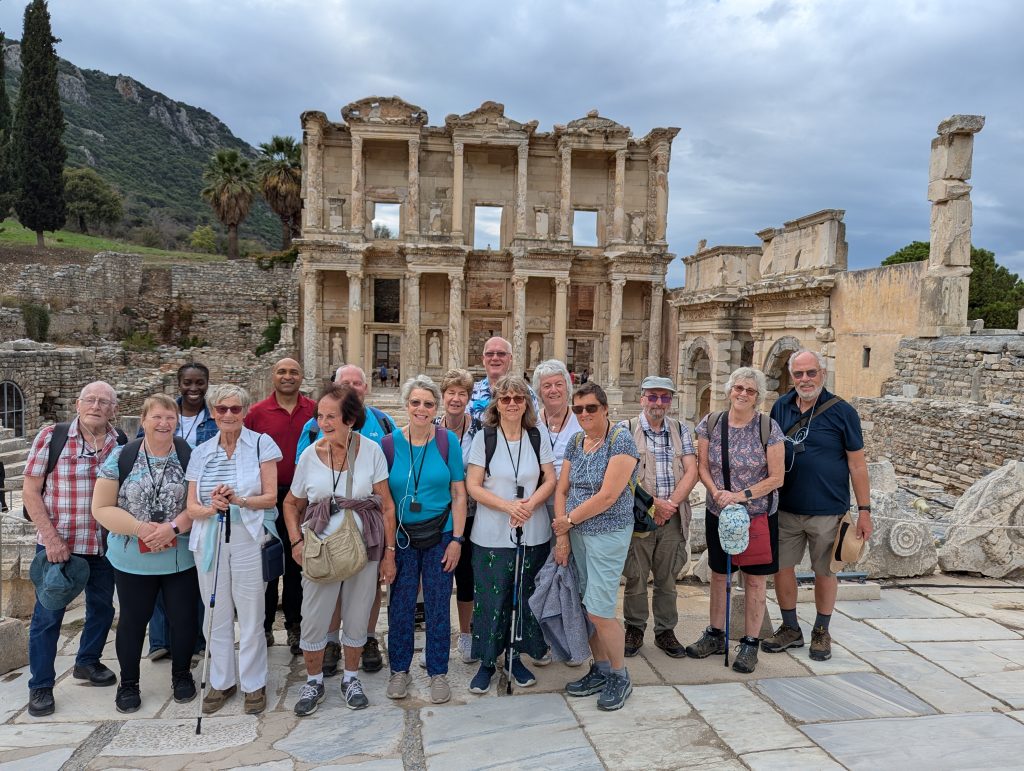
Of course, one can’t have intergenerational ecumenical experiences without young people. Those young people are found in digital spaces, and so I intentionally shared several reels from the trip on Instagram while I was away. I also have additional drafts that I will continue to edit and release over the course of the year. My hope is that these reflections will encourage other people my age and younger to consider participating in a similar ecumenical experiences.
I feel a strengthened desire to encourage young Christians to see unity not as optional, but as a vital expression of their faith. In my new role as a Denominational Ecumenical Officer for my church (Redeemed Christian Church of God, RCCG) I hope to do this.
Overall, this ecumenical experience has given me renewed confidence to foster ecumenical relationships in my area. It reminded me that unity grows through shared experience, honest dialogue, and genuine fellowship. I am eager to cultivate those spaces more intentionally within my own context in England.
Dolly was part of a pilgrimage led and organised by Rev Paul Snell (former Devon County Ecumenical Officer), who runs similar occasional trips through Maranatha Tours.
Find out about The Bill Snelson Young Ecumenists Fund and read about the experience of other grant awardees.